Showing posts with label NVIDIA. Show all posts

Saturday, March 27, 2010

NVIDIA 'Fermi' (GF100) @ GeForce 400 Series (DirectX 11) - Part 2

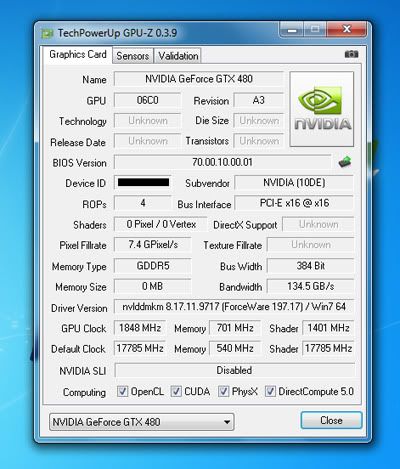
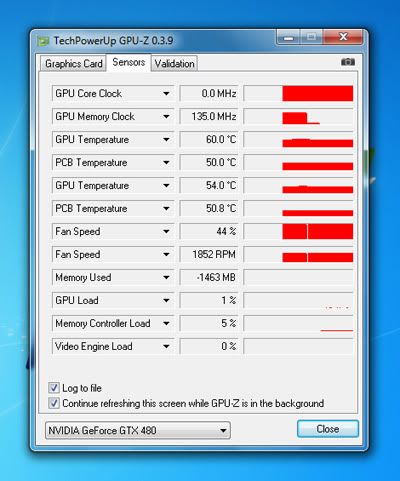
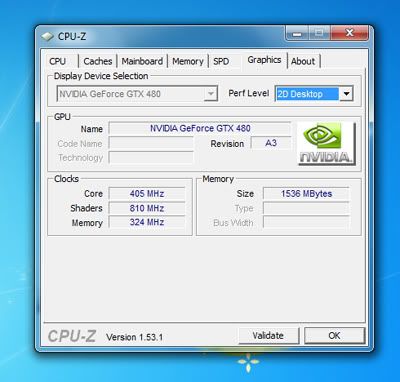
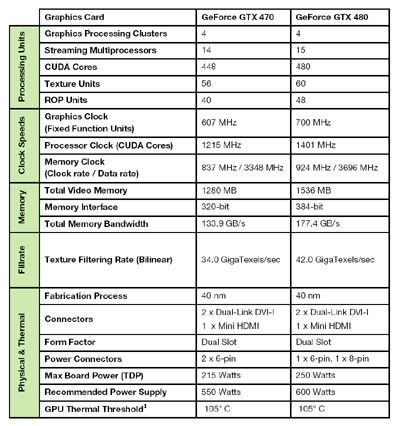
The original post will be too long for what we have to add now, so we're starting a new post to continue off the previously published specifications (both GPU-Z and CPU-Z as well as official NVIDIA), now adding scores and screen captures.
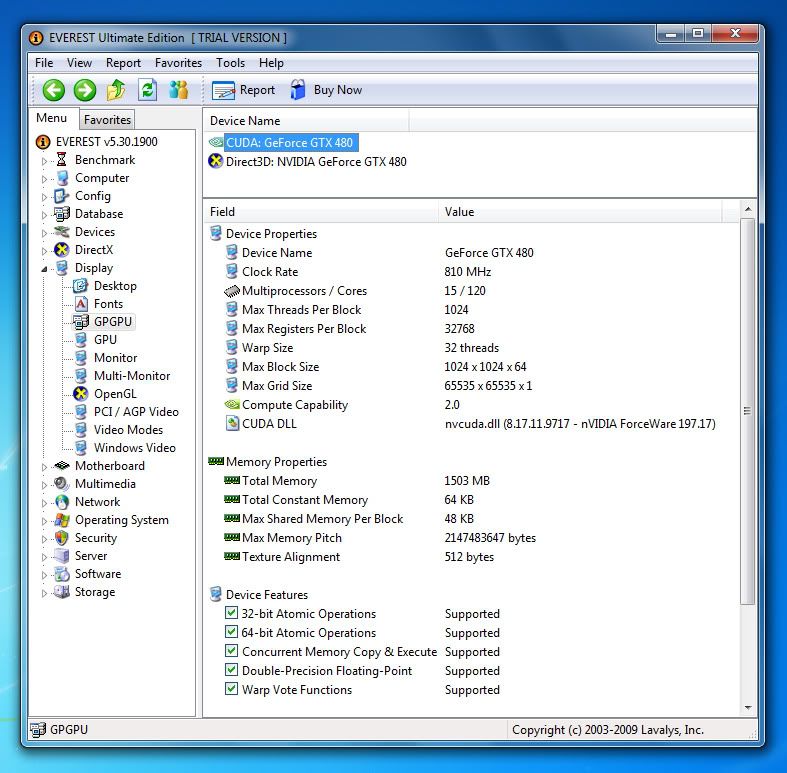
What Everest says about the new NVIDIA GeForce 400 (480), powered by the GF100 (Fermi) chip. It's a larger image so you can click on it to view the original size.
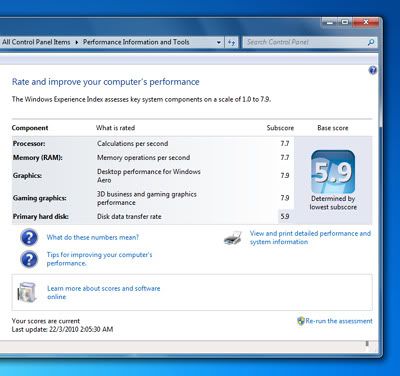

Windows 6x Experience Index gives the GeForce 480 a 7.9 (the maximum) for Graphics. It gave the GeForce 285 a 7.4 - see here when we tested the Hexa/6-core (Gulftown) Intel Core i7 980X processor, which we used to test this GeForce 480 as well.

So what happens when NVIDIA releases a dual-GPU version of the GeForce 480? Say the, GeForce 495, like they did with the GeForce 295, using dual GeForce 280 GPUs? Or when NVIDIA's rival, AMD, releases their ATI Radeon HD6000 Series? Looks like Microsoft needs to expand the max limit!
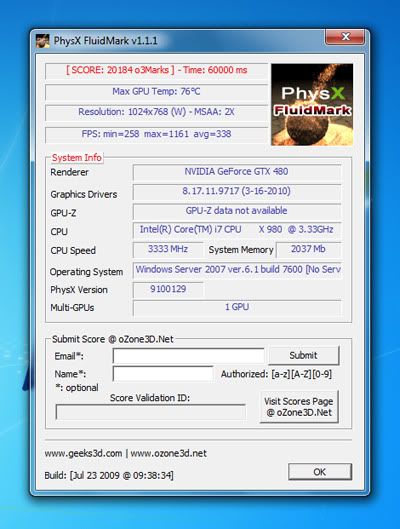
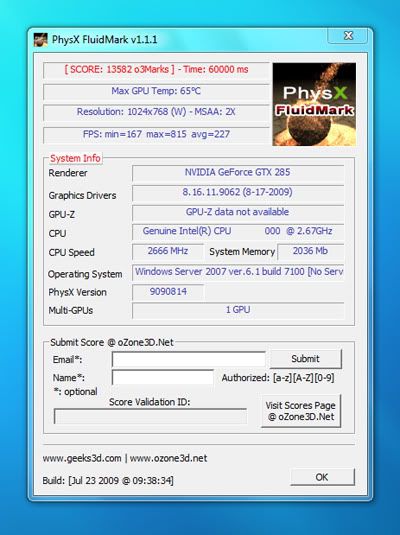
How does NVIDIA's PhysX fare with the 480? As you can see, it averages around 338FPS over the GeForce 285's 227 average. While the processor is different, since we tested the 285 at an earlier time before we had the HexaCore i7 980X, PhysX doesn't rely on the processor but the graphic card, which was the whole point in the first place to do physics calculation on the GPU to free up the processor to focus on the other demands the game is requesting to handle.
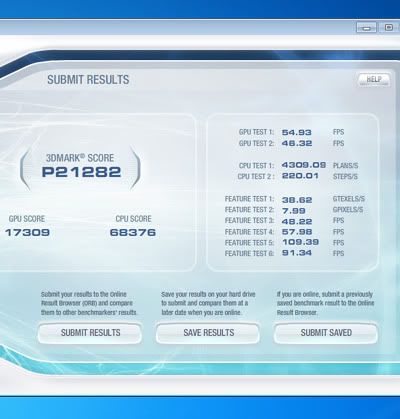
Futuremark's 3DMark Vantage, with a Performance preset, gives 20K!

Coming up next - videos of the 480 in action! Including the new water Tessellation you saw in the first post, but now with video of it at work! It will blow your mind away to the level of realism graphics have come to! Also, there'll be a video of the new NVIDIA OptiX real-time 3D Ray-Tracing video we showed in the first post update, as well as a video of Unigene's Heaven benchmark, which shows Tessellation at work real-time as you switch it on and off dynamically!
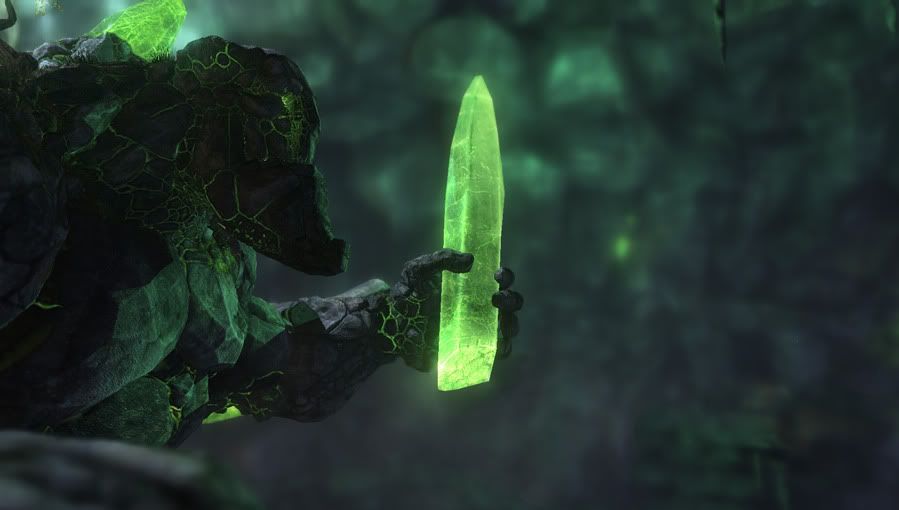
Yes you can click on it to enjoy the double-size original image

As usual, before we go, here's something to drool by while you wait for the next (and 3rd) post!

More Data?

Friday, March 26, 2010

NVIDIA 'Fermi' (GF100) @ GeForce 400 Series (DirectX 11) - Update 2

Update 2 - A new post has been created with all the scores and screen captures.

Update 1
- We'll be updating this post with specifications and scores as well as screen captures and videos in the following hours so stay tuned! GPU-Z & CPU-Z:


Here are the official specifications for the high-end 480 and the middle-range 470 cards:

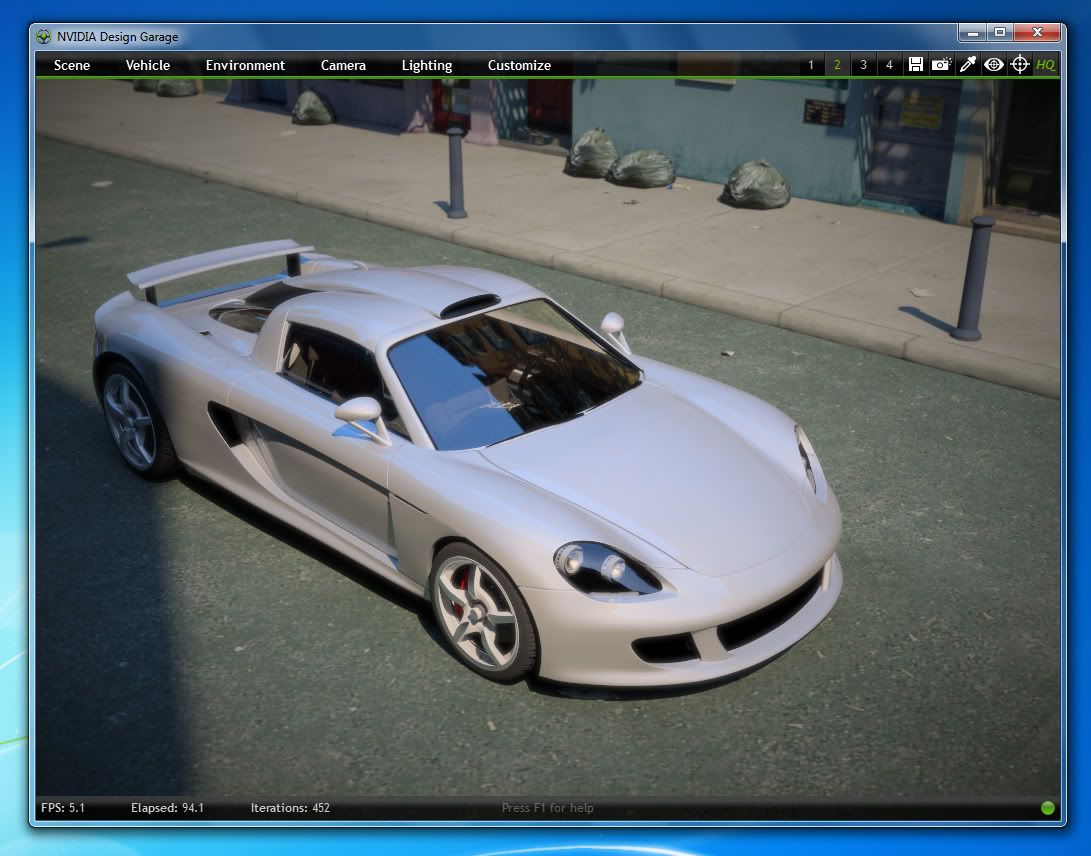
Numbers are boring aren't they? A picture speaks a thousand words so we'll throw in something new for you to whet your appetite as well - NVIDIA's OptiX Ray-Tracing technology @ work:


Yes, you can click on it to enjoy the larger XGA (1024 x 768) real-time ray-traced 3D scene

This feature comes on GeForce 400 Series now and not just on Quadro professional workstation video cards. This means now games can start to use it! More to come! Stay tuned here!

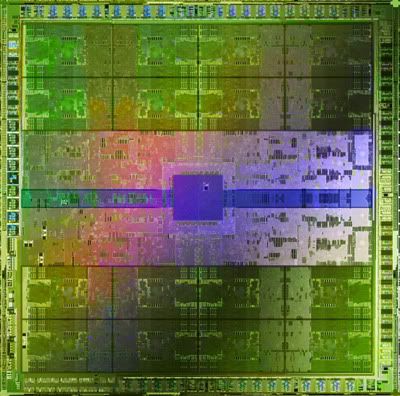
Say hello to Fermi, a 3billion-transistor graphics processor

If the title didn't already give it away, then you know what this post is about - that's right. It's NVIDIA's DirectX 11 graphic card - the GeForce 400 Series, based on the GF100 GPU (Graphics Processing Unit), codename Fermi, after Enrico Fermi, the Italian physicist who created the first Nuclear Reactor @ Chicago, the Pile-1.

Is NVIDIA planning to nuke its rival, AMD, for their ATI Radeon DX11 card?

His work led to the development of B Reactor @ Hanford, Washington, the first Plutonium production reactor, for America's Manhattan Project, which resulted in the test of the first Atomic Bomb @ Trinity, New Mexico, America. This led to the bombing of Hiroshima and Nagasaki @ Japan, during World War 2. So is NVIDIA planning to 'bomb' its rival, AMD?

Its rival's DX11 card was black and red, NVIDIA is going for black and green, obviously

It's rival was the first to release a DX11 card (via their acquisition of ATI), the Radeon HD5000 Series in 2009, which was supported by Windows 6.1 (Windows 7), and later in Windows 6.0 (Vista) via the Platform Update. So now NVIDIA catches up with the competition. Of course, expect its rival to counter-attack - and they will - with the HD6000 later.

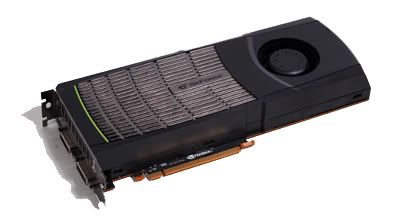
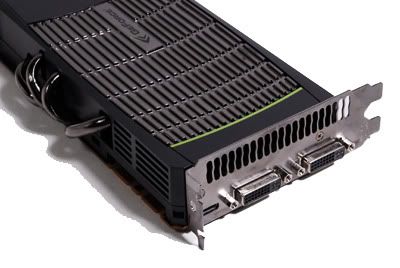
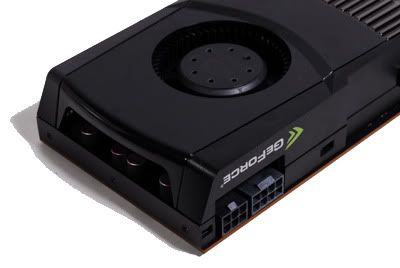
Dual-Linked DVI ports as usual, and HDMI has been dumped for DisplayPort instead. Checkout the quad heat-pipes!

Just like it's rival, you WILL need an 8-pin power connector from your PSU, in addition of the usual 6-pin. However, the good news if your PSU doesn't have 8-pin (not for the processor via the board version), you can also make do with a dual 4-pin Molex adapter which some graphic cards bundle. As for PSU Wattage, a 500W will do - unless you're running a RAID array, etc.

No, it isn't a photo of the ocean - it's a 3D real-time image

Anyway, in order to whet your appetite, here's a shot of what the new card can do with its Tessellation (which NVIDIA claims to be better than its rival due to its scaleable feature which it claims its rival lacks). Until then, enjoy the shots of NVIDIA's flagship desktop hardware!

More Data?

Saturday, September 26, 2009

AMD ATI Radeon HD5000 Series Windows 7 Direct X 11 graphic cards


If you don't already know by now, the next standard in gaming graphics is DirectX 11. This is found in Microsoft's upcoming Windows operating system, Windows 6.1, or more popularly known as Windows 7 (not because 6+1=7 or because Windows Vista was Windows 6.0, but because Microsoft says this is the seventh release of Windows).

DX11 adds some new features and one of them is Direct Compute, using the new Compute Shader element, which adds to the previous Geometry Shader which was introduced in DirectX 10 (Unified Shader Model 4) on Vista, and the Pixel and Vertex Shaders, which were introduced in DirectX 9 (Shader Model 3) prior to that in Windows XP.

Direct Compute is an implementation of GPGPU technology. Basically it uses your graphic card for processing instead of just your processor, thereby giving you extra performance. This can also be used for 3D Ray-Tracing and Video Transcoding. But did you know DX11 can work with DX10?


Unlike DX10 which required either AMD's ATI Radeon HD2000/3000/4000 series, or NVIDIA GeForce 8/9/200 series of DX10 gaming cards, DX11 can function on DX10 gaming cards as well, albeit not as fully as on DX11 gaming cards, which is the ATI Radeon HD5000 series, or NVIDIA GeForce 300 series (which isn't out yet).

As expected, this means DX11 can also work on Vista, and it can, when Microsoft releases the Vista Platform Update, but like the above DX11 and DX10 compatibility, you won't get the full features as compared to a pure DX11 platform, which is Windows 7 with DX11 gaming card, and in this case, only ATI's HD5000 is out. With this, coupled with Windows 7, you'll get the full DX11 deal. See here for a list of upcoming DX11 games.

Of course, with DX11 you can also play DX10 games, and you can see a list of DX10 games here - but remember to update your DX files! If you haven't done so, you can get it for free from Microsoft's site here (100MB). Even if you're using Windows XP with DirectX 9, it will update your files to the latest DX9. This might help if you're having problems running some games.

More Data?
Friday, July 31, 2009

NVIDIA CUDA

NVIDIA CUDA GPGPU technology logo

What is NVIDIA CUDA? If you've read our previous post here, you'll get a brief understanding of CUDA, which is basically NVIDIA's implementation of GPGPU technology by supporting programs (and games) designed to take advantage of CUDA. GPGPU is explained below.

CUDA is found on GeForce 8 series of 3D gaming and multimedia graphics card and above - as well as Quadro FX professional workstation video cards. This is possible because since GeForce 8, as well as the new Quadro, the design of the graphics processor (the GPU) on the card has changed. In fact, it's more like a CPU (the processor on the mainboard) now. Hence what you have is a GPU that functions like a CPU, and is known as GPGPU. But how did this come about and why? Read on.

In the past, GPUs work in seperate processing methods - one part of the GPU will do the processing of the 3D structure, while the other part will then process the image on the structure - think of it like how when you construct a building you first have to build the framework before you can install the windows and floors.

That worked fine for awhile, until 3D games began to get more demanding and this was a poor allocation of GPU resources - what happens if you had more structures to show but less textures and surfaces? Or the other way around? Hence the birth of the new GPU known as Unified Shader Architecture, which combines the mini processes inside the GPU into a single block which can process anything given to it dynamically. So what you have now is one large processor.

So since you have a CPU in a GPU, now you can also use it for processing programs asides from just processing 3D graphics in games (or processing 3D scenes for Quadro cards). In comes CUDA which allows this since the GPU is still not a full CPU so you need an interface medium.

What can CUDA do? Basically anything that a CPU can do - except programs have to be made to take advantage of CUDA for this to happen, so that will take time. Some of the early programs include video conversion tools.

BadaBoom CUDA media converter
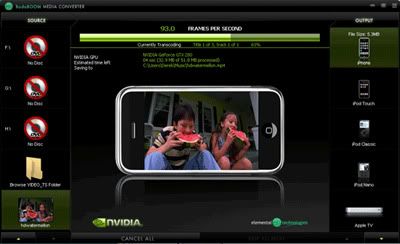
BadaBoom Media Converter using NVIDIA CUDA GPGPU technology

This converting (transcoding) process takes up time and if you were to run it on your CPU, not only will you won't be able to do other tasks on your computer because your CPU is busy with the process, it will also be slower since CUDA is a newer technology which can be done from scratch to be optimised faster. One such CUDA transcoder is BadaBoom.

Photoshop plugin
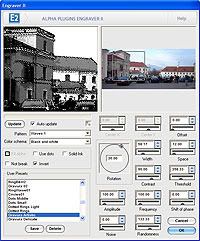
An image filter plugin in Adobe Photoshop

Then there's also the ability to use CUDA for image processing, like running plugin filters in Adobe's Photoshop. Again, this takes time on the CPU so for large images, it will be faster on CUDA. You can also use CUDA for games. That's where Microsoft's Windows DirectX 11's Compute Shader comes in, found in Windows 7. But we'll leave that for another post.

More Data?

Thursday, July 30, 2009

Coming Soon - Leadtek Quadro FX 1800 Review

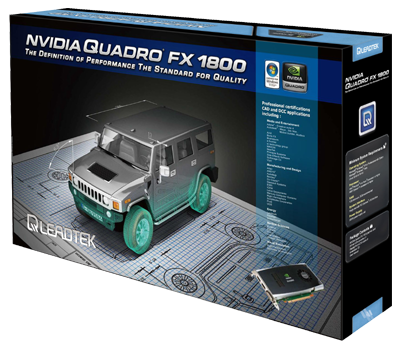
LeadTek Quadro FX 1800 box

If you're a a workstation user, you might be familiar with the professional video cards from NVIDIA called the Quadro. Unlike the GeForce graphic cards, which are designed for gaming and multimedia, the Quadro cards are designed with 3D and digital animation in mind - though they can also handle 3D games as well - but not so good since they're not designed for it!

But why? Want to know more about the differences? Read on to find out.

NVIDIA GeForce and Quadro logos

By the way, both GeForce and Quadro can also be used for programming via NVIDIA's CUDA technology, which makes use of GPGPU, a concept where the graphic card's GPU is used as a processor - just like the processor on the mainboard. The difference in that the program must be specially designed to take advantage of this. That's where technology like CUDA comes in so programs written for CUDA can do this.

NVIDIA CUDA technology logo

CUDA allows you to use GeForce and Quadro card for more than what they're designed for - like video conversion (transcoding), image editing, and even artificial intelligence (AI)!

More on CUDA later - let's focus on the Quadro first, since most people know about GeForce already. Then we'll get on to how CUDA can be used on both cards.

The Quadro is much more expensive than the GeForce because they perform better for 3D work, especially in response times working with a 3D object, thanks to their data transfer bandwidth, optimised drivers, as well as the firmware on the Quadro, which controls things like sacrificing speed for quality. In games, speed is more important, hence why in GeForce cards this will be reversed. In Quadro cards, quality is much more important.

Worth mentioning is that the Quadro runs at 5GBps for its data transfer, taking advantage of the 5GBps PCI Express 2.0 slot (where a graphic card sits on a mainboard). The highest-end single-GPU GeForce, the 285, runs at 4.6GBps. For reference, the older PCI Express 1.0 slot interface supports up to 2.5GBps only.

3D software
Autodesk's 3D software - AutoCAD (left), 3D Studio Max (centre), Maya (right)

ALso, some Quadro cards are specially designed for certain 3D software like Autodesk's classic AutoCAD, or their acquired 3ds (3D Studio Max) and Maya software. While GeForce just needs to be fast for modern 3D games, Quadro needs to be accurate, and this is where it excels in, and that explains the higher cost of the hardware.

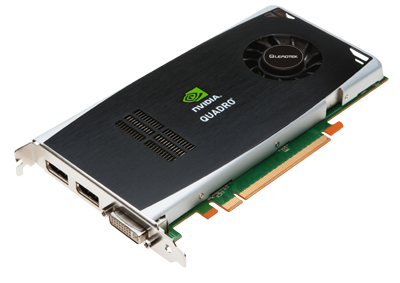
Leadtek Quadro FX 1800 card

To take a better look at Quadro, we'll be testing one from Leadtek, the FX 1800, which replaces the previous FX 1700, both coming from the middle-range line. Stay tuned for it!

More Data?