
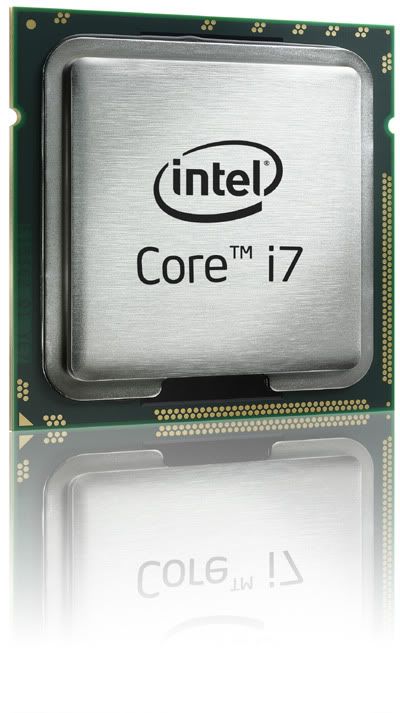
The Intel Core i7 quad-core desktop processor will soon also come in a version with integrated dual-channel DDR3 memory controller
Don't do a double-take. You read that right. Intel Core i7 quad-core desktop processor with Dual-Channel integrated memory controller, not Triple-Channel. For those who know the Core i7, you'll know it supports triple memory modules, so to go backwards and support dual memory modules is a shocker! So why is Intel doing this?
Because the Core i5 desktop processors will be coming out, which comes with an integrated dual-channel memory controller, so offering the Core i7 with the same feature allows users to select from the middle-range Core i5 or the high-end Core i7 while keeping their current dual memory modules from the previous Core 2-class of desktop processors. Want to know more?
By the way, this is of course, assuming you were using DDR3 memory and not DDR2, as some previous desktop boards which supported the Core 2-class of desktop processors only supported DDR2 memory. If that's the case then you can also consider going for the triple-channel Core i7 since you'll be upgrading your memory anyway! This new dual-channel Core i7 is designed for users who already are using DDR3 memory, but want more power than the Core i5.
So what happens to the triple-channel Core i7? It will still be there as a top-end quad-core desktop processor, and for those who are willing to buy new triple memory modules, as well as need more memory, specifically if they're using an x64 (64-bit) operating system, which can use beyond 4GB of memory.
How would you know the difference then between a dual- and triple-channel Core i7? The triple-channel still maintains the LGA1366 processor socket while the new dual-channel Core i7 and i5 (as well as entry-level dual-core i3) will use the LGA1156 processor socket instead. That's right, there'll also be a Core i3 dual-core entry-level desktop processor for those who don't even need the power of the Core i5.
The new LGA1156 processors will be supported by desktop boards powered with Intel's P55 board controller (chipset), while the LGA1366 Core i7 processor will continue to be supported by Intel's X58 chipset. That's not the end of the Core i7 triple-channel class processors though. Intel will also release the Core i9, a six-core desktop processor for the Core i7 platform.
Stay tuned for more updates about these new processors if you're confused about them.
More Data?






















 Posts
Posts


