Showing posts with label p55. Show all posts

Saturday, September 12, 2009

Intel Core i5

2009 Intel Core i5 processor logo

As mentioned previously, Intel will be coming out with their new processor (CPU), the Core i5. It is now out, designed to work on desktop boards powered by the equally-new Intel P55 chipset (board controller). These new boards will also work with the new Core i7. But wait, this new Core i7 is not the same as the older Core i7! Confused? Read on.
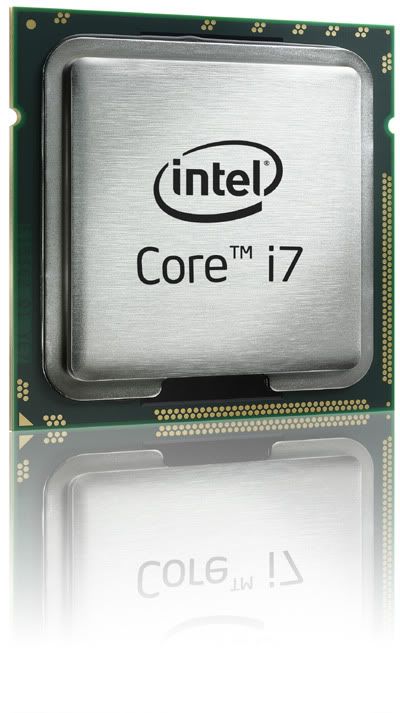
2009 Intel Core i7 processor logo

This new Core i7 differs from the previous Core i7 in a two ways:
As you can see, the new i7 is the same as the i5, whereas the old i7 works by itself. As also mentioned previously, Intel did this so owners of existing dual-channel DDR3 memory (RAM) on desktop boards powered by the Intel 4-Series chipset (like the P45) wouldn't have to waste their RAM.

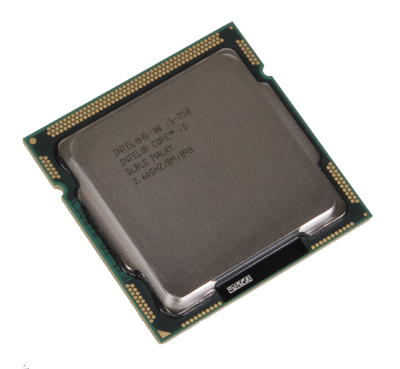
Intel Core i5 processor
The new Intel Core i5 processor. The new Core i7 processor looks just the same too!

Plus, now that you have two CPU types to select from, you have even more choices depending on your needs. But what's the difference between the new i7 and the new i5 then? Hyper-Threading. The new i7 has HT, while the new i5 doesn't have HT. The old i7 has HT too, by the way. As you can see, this makes the CPUs available from high-end (old i7), middle-range (new i7), and mainstream (new i5). But what is HT?
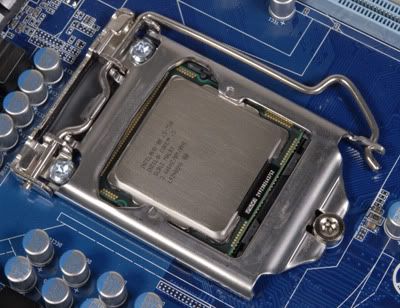
Intel Core i5 processor in LGA 1156 socket on Intel P55 chipset board
The new Intel Core i5 processor in its new LGA 1156 socket on a new Intel P55 board

HT is basically a feature where a single CPU core can function as a quasi dual-core, albeit not as fully-functional as a full-fledged dual-core. So the old i7 and new i7, both being quad-cores with HT, you effectively have quasi octo-cores, while the new i5, being quad-core without HT, is just a quad-core. Again, just to remember, the difference between the old i7 and new i7 is the number of RAM module sticks it supports.
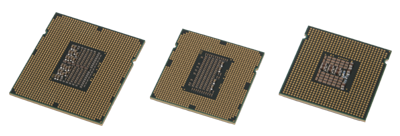
Intel Core i7, Core i5, and Core 2 processors
(left to right) Old i7, i5 (as well as new i7), old Intel Core 2-class

So there you have it. Decide on how much power you need, and then you can go get the right type of CPU to meet your needs. The new i5 with 4 cores and dual RAM, the new i7 with 8 'cores' and dual RAM, or the old i7 with 8 'cores' and triple RAM. New i5 and new i7 need P55 boards, old i7 needs X58 boards.

More Data?

Wednesday, August 12, 2009

Dual-Channel Core i7


The Intel Core i7 quad-core desktop processor will soon also come in a version with integrated dual-channel DDR3 memory controller

Don't do a double-take. You read that right. Intel Core i7 quad-core desktop processor with Dual-Channel integrated memory controller, not Triple-Channel. For those who know the Core i7, you'll know it supports triple memory modules, so to go backwards and support dual memory modules is a shocker! So why is Intel doing this?

Because the Core i5 desktop processors will be coming out, which comes with an integrated dual-channel memory controller, so offering the Core i7 with the same feature allows users to select from the middle-range Core i5 or the high-end Core i7 while keeping their current dual memory modules from the previous Core 2-class of desktop processors. Want to know more?

By the way, this is of course, assuming you were using DDR3 memory and not DDR2, as some previous desktop boards which supported the Core 2-class of desktop processors only supported DDR2 memory. If that's the case then you can also consider going for the triple-channel Core i7 since you'll be upgrading your memory anyway! This new dual-channel Core i7 is designed for users who already are using DDR3 memory, but want more power than the Core i5.

So what happens to the triple-channel Core i7? It will still be there as a top-end quad-core desktop processor, and for those who are willing to buy new triple memory modules, as well as need more memory, specifically if they're using an x64 (64-bit) operating system, which can use beyond 4GB of memory.

How would you know the difference then between a dual- and triple-channel Core i7? The triple-channel still maintains the LGA1366 processor socket while the new dual-channel Core i7 and i5 (as well as entry-level dual-core i3) will use the LGA1156 processor socket instead. That's right, there'll also be a Core i3 dual-core entry-level desktop processor for those who don't even need the power of the Core i5.

The new LGA1156 processors will be supported by desktop boards powered with Intel's P55 board controller (chipset), while the LGA1366 Core i7 processor will continue to be supported by Intel's X58 chipset. That's not the end of the Core i7 triple-channel class processors though. Intel will also release the Core i9, a six-core desktop processor for the Core i7 platform.

Stay tuned for more updates about these new processors if you're confused about them.

More Data?

Thursday, July 9, 2009

Coming Soon - Intel Core i5

Intel Core i-class processor

There's a new processor (CPU - Central Processing Unit) coming out from silicon (sand) by Intel soon - the Core i5 (as well as the i3). Yes, they're related to the i7, which is pretty much the best desktop CPU on the planet.

The main difference between the i7 and the i5 and i3 is that unlike the i7, the i5 and i3 will use a dual-channel memory module system instead, just like pre-i7 desktop platforms. While the i7 introduced triple-channel, the i5 and i3 are designed for middle-range or mainstream (i5) and entry-level (i3) desktops. But what chipset will it need?

If the i7 used the Intel X58 chipset, then the i5 and i3 will use the P55 chipset (for a start), followed by the various other desktop board chipsets that will come later. Since the i5 and i3 will be dual-channel, the contact pins on the CPU will also be less (1156 compared to the i7's 1366).

Other highlights of this new P55 chipset includes the new SATA3 (6Gbps or 600MBps) support (the ports remain the same just like how USB 3.0 ports look the same but support the newer speed - but that's not out yet though!).

SATA3 is designed for SSD (Solid State Drives), not HDD (Hard Disc Drive), as SSDs are faster since they work like USB Flash drives, since both are Flash drives, based on Flash memory. HDDs don't really make full use of SATA2 (3Gbps or 300MBps), so SATA3 is actually for SSDs.

Updated 15th July 2009 - However, PC Perspective has reported that ASUS (the largest board maker around), as well as Gigabyte (and maybe even MSI), who together make up the Big 3 Board Makers, have pulled the SATA3 feature from their upcoming P55 boards due to some problem with the Marvell 88SE9123 chip which powers SATA3 (apparently it can't go to 6Gbps speeds).

Anyway, the new P55 chipset is also a Southbridge, as the Northbridge is finally gone. In the X58 chipset, the Northbridge was a just a controller hub.

So while you need a new board and CPU cooler for the i5 and i3, you can use the same dual-channel DDR3 memory modules from the Intel 3 Series (depends on board) and 4 Series boards. Some might say it's a step backward, but some might say it's a step forward to bring the Core 2-class of CPUs to the i-class of CPU, while keeping the memory standard for mainstream.

More Data?